
Planning for the future often includes considering how to protect your assets and care for loved ones. One effective legal tool in Ontario is the use of a trust. Establishing a trust in Ontario is a topic that becomes especially important as individuals and families consider their long-term planning.
This blog explains what a trust is, how it is established in Ontario, its core benefits, and the legal considerations that come with it. For many, a trust plays a crucial role in a well-planned estate.
Understanding What a Trust Is
A trust is a legal arrangement in which a person (the settlor) transfers assets to a trustee, who manages those assets on behalf of the beneficiaries. Trusts are commonly used in wills and estate planning to manage inheritances, provide for dependents, or control how and when assets are distributed. At its core, a trust offers flexibility and control.
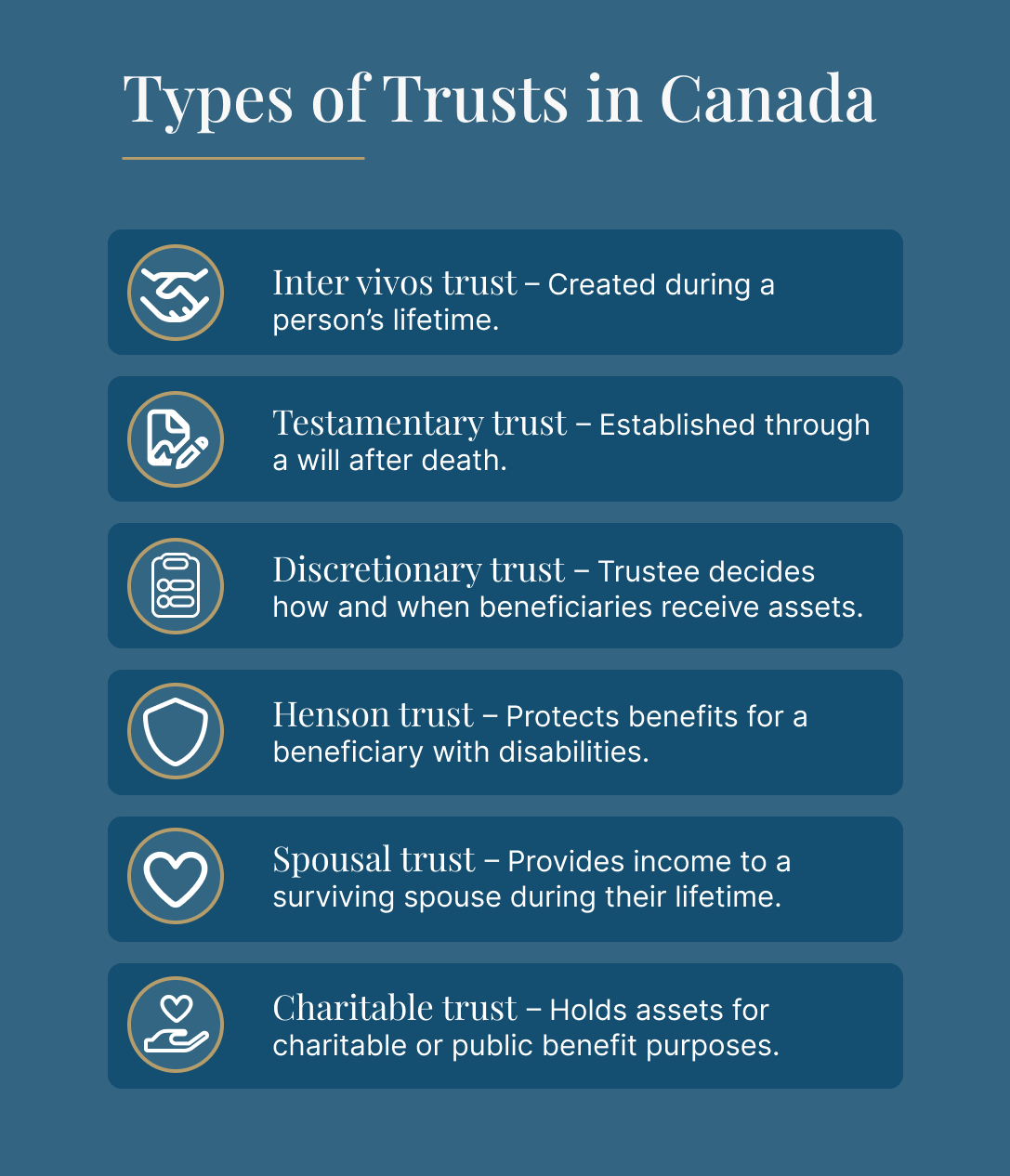
Types of trusts include:
- Inter vivos trusts (living trusts)
- Testamentary trusts (created by a will)
- Discretionary or fixed trusts
- Henson trusts (for beneficiaries with disabilities)
- Spousal trusts
- Charitable trusts
Choosing the right trust structure can be complex. A collaborative and informed approach can help ensure that the arrangement aligns with an individual’s goals and provides long-term clarity for beneficiaries.
How to Establish a Trust in Ontario
Creating a Canadian living trust or testamentary trust involves several steps:
1. Define the purpose of the trust:
This could include supporting a child’s education, preserving wealth, or managing inheritance for a spouse or dependent.
2. Choose the appropriate trust type:
Legal advice is vital at this stage to ensure alignment with your estate objectives.
3. Select a trustee:
A trustee must be capable, trustworthy, and aware of their legal responsibilities.
4. Draft the trust deed:
This legal document outlines the terms, powers of the trustee, and rights of the beneficiaries.
5. Transfer assets into the trust:
This may include money, property, or investments.
6. Comply with reporting rules:
Depending on the type of trust, registration and tax filings may be required.
Ensuring that wills, trusts, and related legal documents are properly drafted and enforceable is essential to avoid disputes or delays. Legal professionals familiar with estate planning in Ontario can assist with areas such as probate, guardianship, and incapacity, particularly when these issues intersect with a trust structure.
Why Establishing a Trust Can Be a Strategic Move
Creating a trust offers a number of practical benefits for individuals and families in Ontario:
Avoiding probate:
Assets in a trust are not subject to the public and often costly probate process.
Protecting privacy:
Trust arrangements are not generally disclosed through court records.
Controlling asset distribution:
This is especially useful when beneficiaries are minors, vulnerable, or have special needs.
Tax planning opportunities:
Trusts can facilitate income splitting or deferral under specific circumstances.
Supporting long-term care needs:
In cases of incapacity, a trust can ensure continuity in financial management.
As noted on the firm’s Wills, Trusts & Estates page, “each estate is as individual as the person to whom it relates.” Legal services must be tailored, and the design of a trust should reflect your values and goals.
Working with an Ottawa estate lawyer ensures that your trust integrates effectively with the rest of your estate plan, including powers of attorney, wills, and property ownership.

Legal Considerations When Creating a Trust
Although there are benefits, setting up a trust demands careful planning. Legal considerations include:
Tax compliance:
Many trusts are required to file tax returns annually and pay taxes on any retained income.
Trustee duties:
A trustee has fiduciary obligations under Ontario law and must act solely in the interest of the beneficiaries.
Permanence:
Some trusts are irrevocable, meaning they cannot be amended or cancelled after creation.
Disputes or claims:
Poorly worded trusts can lead to litigation, especially in blended families or complex estates.
Trust law also interacts with other legal areas, such as property law, incapacity planning, or even business succession. For this reason, working with a lawyer who specializes in wills and understands the broader legal landscape is essential.
At Gibson Tanner Rabin, our services are provided by licensed legal professionals who emphasize collaboration and transparency. Our guiding approach—Guided by Reason, Focused on Value, Founded on Integrity—reflects our commitment to client-centred outcomes.
Final Thoughts on How to Establish a Trust in Ontario
So, how do you establish a trust in Ontario and why might it matter? A trust is a powerful estate planning tool that provides control, flexibility, and peace of mind. It enables you to support your family, manage taxes, and plan for the future in a manner that aligns with your wishes.
Gibson Tanner Rabin offers legal guidance in estates and trusts, combining legal experience with thoughtful planning support. From preparing trust deeds to coordinating with other elements of your estate, their team is committed to delivering practical, ethical service.
Protect Your Legacy with Trusted Legal Advice
Establishing a trust is about more than legal documents—it’s about clarity, purpose, and protecting what matters most. At Gibson Tanner Rabin, our lawyers assist with wills, trusts, and estate planning, ensuring that your decisions reflect both legal best practices and personal intentions.
Contact us today to schedule a consultation and begin your estate planning with confidence.